Blog · 2026-11-02
How to read a wholesale MOQ
A minimum is a door, not a verdict. Here is how we want buyers to think about it.
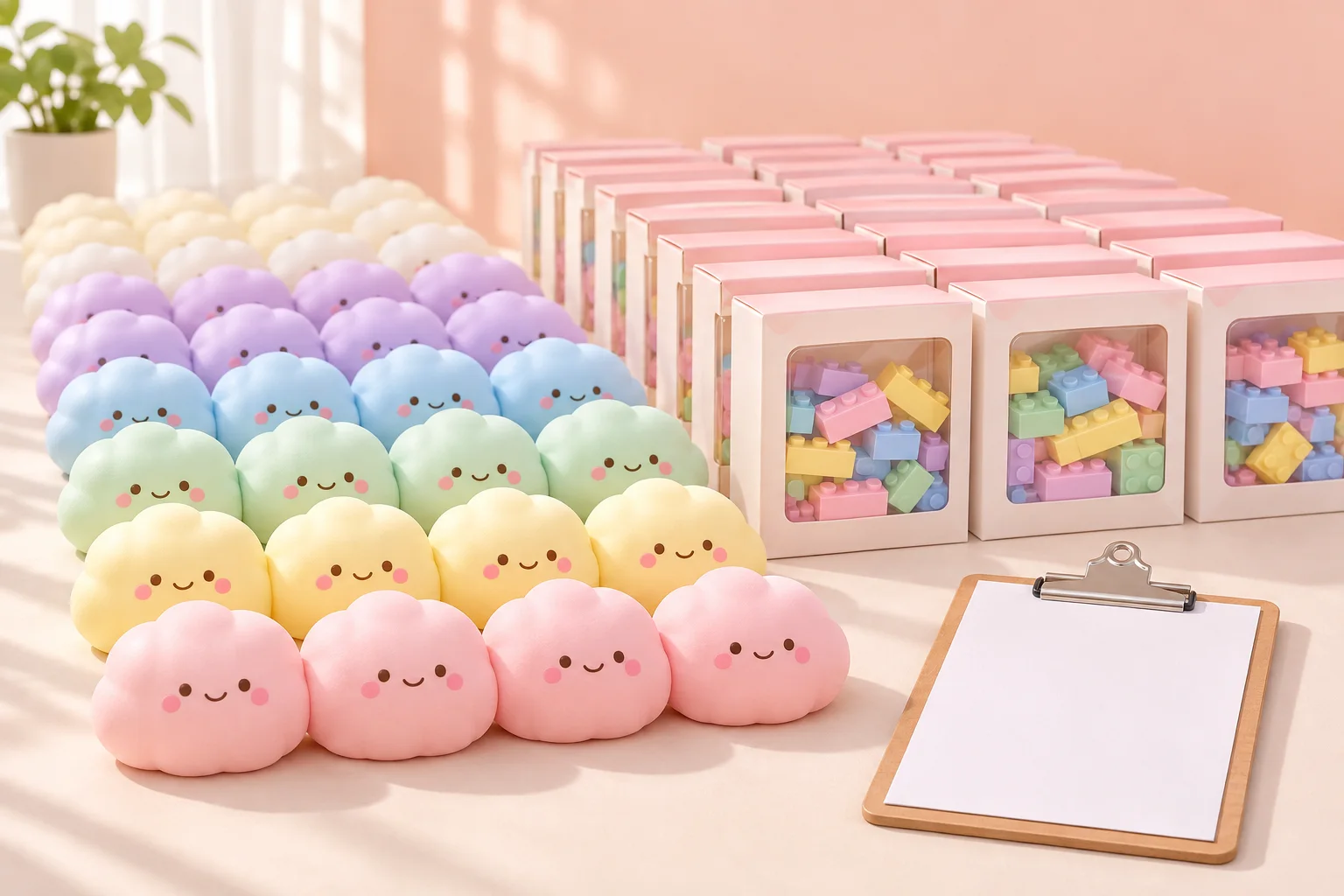
An MOQ is the smallest quantity a workshop will set up for. It is not a suggestion about how many you should buy, and it is not a test of nerve. Minimums and price breaks are not published on this site. They belong on the quotation.
Buyers still need a way to read the number when it arrives. A minimum can describe pieces, sets, cartons, or a color run. If you only read the digits and ignore the unit, you will agree to a different job than the one you described. This note is about reading. It is not a price list, and it will not invent a quantity for your item.
Why a minimum exists
A workshop does not start from zero for each small order in the way a shopper imagines. Color has to be brought to the machine, a booklet has to be printed, a box has to be cut, and a line has to be cleared. The minimum is the workshop saying what makes that setup worth doing. It is a production fact, not a judgment of your shop.
Different materials set up differently. A painted slow-rise squishy, a molded silicone shape, and a brick set with a booklet are not the same kind of setup. Comparing their minimums as if they were the same sentence will mislead you. Ask what the setup actually is.
Start from the shelf, then look at the number
A gift-shop trial and a seasonal program are different jobs. A rounder unit price is not a reason to buy the seasonal goods. Both can be honest. They are honest about different jobs. Decide what the first order must do: prove a shelf, fill a launch, or supply dealers. Then read the minimum against that job.
When the unit is a kilogram or a bag, the commitment is the unit, not a small-looking minimum. Read the unit of measure as part of the sentence. A small count of a heavy unit can be a larger commitment than a large count of a light piece.
What to ask when the number is too high
If you need less than a workshop will set up, ask. The answer is sometimes a sample and a later bulk, and sometimes a simple no. A no is cheaper than a carton of something you cannot sell. Do not treat a refusal as a negotiation failure. It may be the only honest reading of the setup.
Mixing item numbers in one inquiry is the usual way to build a shipment. Say what the shipment is for. We will tell you what can share a carton and what must travel as its own line. A mix does not automatically lower a setup. It can, when the items really share a material and a pack. It cannot, when they only share your wish.
How this site handles it
Product pages do not print a minimum. The inquiry list is a list of items, not a checkout. When you send the inquiry, name the quantity you have in mind and the market. The reply will say whether that quantity can be made, and on what unit. If we do not know yet, we will say we do not know, and the sample or the workshop confirmation will come before a confident line.
Keep the quotation next to the sample approval. A minimum that was discussed against an old pack is not a minimum for a new gift box. When the pack changes, ask for the line again. The ordering guide is the place we describe that sequence without pretending the figures live on the website.
When you write the inquiry, separate three things: the quantity you hope to sell, the quantity you can store, and the quantity you are willing to approve as a first run. They are often different. We can only quote the one you are actually asking us to make. If you want a sample first and a decision later, say that. A sample is not a disguised minimum, and a minimum is not a sample program.
Share the quotation with the person who will receive the goods, not only with the person who likes the unit. A minimum that looks comfortable in a spreadsheet can be awkward on a shop floor or in an apartment used as a warehouse. If the receiver says the quantity cannot be stored, the commercial reading was incomplete. Fix it before anyone pays a deposit.