Blog · 2026-11-04
Custom packaging for a toy brand
The box is part of the product. It also decides the carton, and the carton decides the freight.
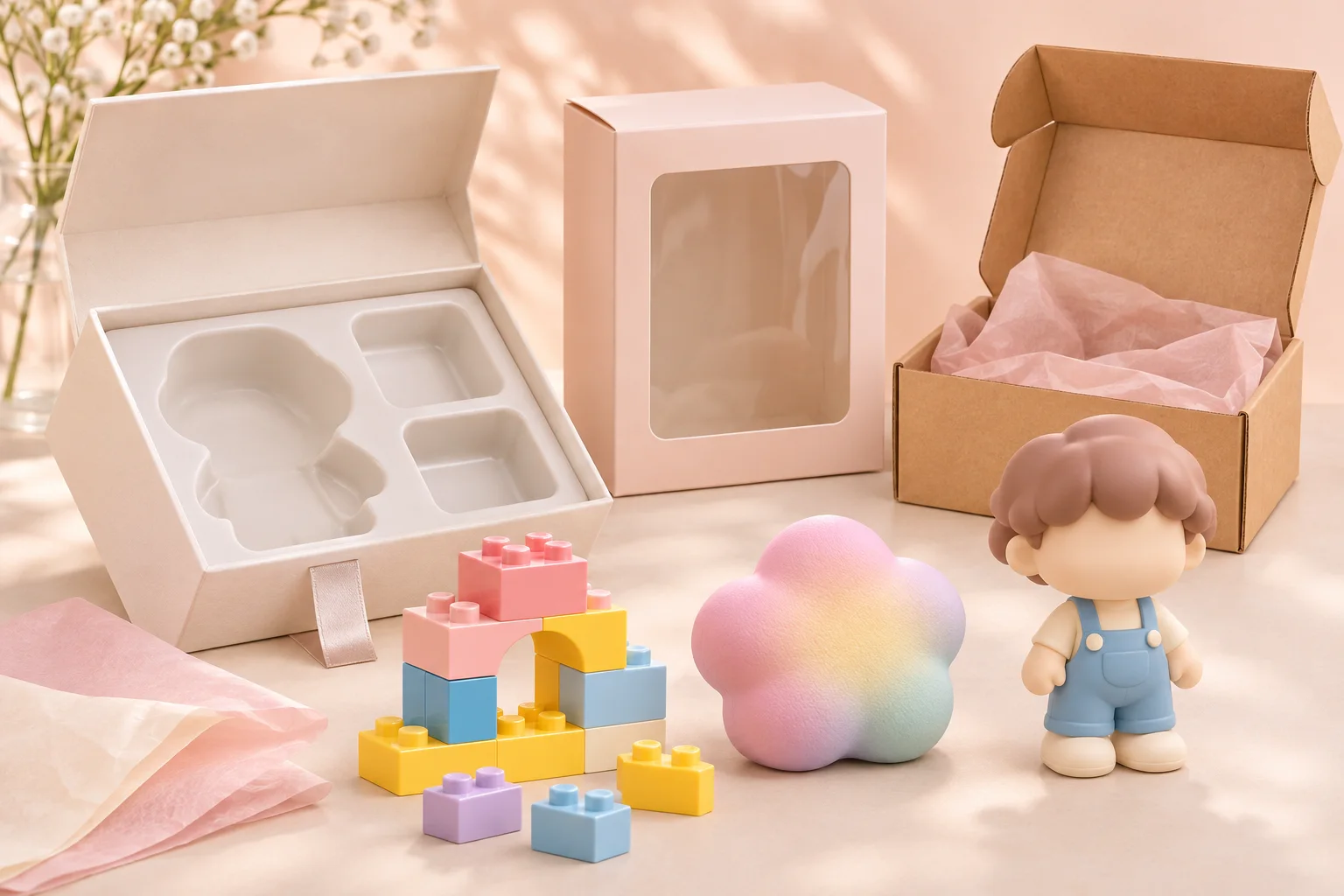
Buyers treat packaging as artwork until the forwarder treats it as cube. Both are right. A rigid gift box, a window box, and a mailer are different objects. They protect different things, they show different things, and they fill an export carton in different ways. Choose the pack with the toy, not after the toy is finished.
This note covers the packs we are usually asked to develop for building blocks, squishies and fidgets, and vinyl figures. The same logic applies when the piece is a design direction on the capabilities page.
The usual pack types
A rigid gift box is a presentation. It suits a desk set, a brick model, or a vinyl figure that should feel like a gift before it is opened. It is bulky. The insert has to hold the piece so the lid can close without crushing a stem, a flower, or a painted face.
A window box shows the toy and still gives you a card for the logo, the warning, and the barcode. It is the usual retail pack. The window film has to be specified. A film that fogs, or a window placed over the wrong part of the toy, wastes the whole point of the window.
A mailer box is for a buyer who ships one unit at a time. It can be the retail pack and the shipper, which is attractive, or it can be too large for the shelf you also need. Say whether the first life of the box is a shop peg, a shelf, or a parcel.
An insert, a poly bag, and a hang tag are the quiet parts. The insert stops movement. The bag is sometimes required by the market you name, and sometimes it is only how the workshop keeps a set of small parts together. The hang tag carries what did not fit on the box. None of these are free decoration. Each one changes the inner pack.
What to send
Send a dieline if you have one, and say whether it is final. Send artwork in a form a printer can use, with fonts outlined or included, and with the barcode you actually intend to scan. A screenshot of a barcode is not a barcode. If you do not have a dieline, send the logo, the required warnings for your market, and a note about what must be visible.
Tell us the languages on the pack. A pack that is legal in one market can be incomplete in another. We will not invent legal lines. If you are unsure, say so, and we will leave a place for the text you confirm rather than guess a warning.
How the pack changes the freight
The export carton is not the retail box. A gift box with a deep insert can make a light, airy carton. Air is a volume problem for sea freight. A tight mailer can make a denser carton that is harder to lift. The note on carton math is the longer version. The short version is: do not book freight from the retail size.
We reconfirm the outer carton before a booking. If the pack is still a sketch, the carton is still a sketch, and the freight figure on a quotation would be a guess. We would rather say that in the same sentence than dress a guess up as a term.
When you know the pack, or when you know you need help choosing it, send the brief with the toy and the market. Artwork can follow. The decision about the pack should not.
Two reviews keep the pack honest. First, can a person open and close it without damaging the toy, and can they see what you promised they would see. Second, can the packed unit sit in an export carton without crushing the lid or leaving so much air that freight becomes the real product. Bring a sample of the pack, not only a drawing, to that review. A dieline that looks generous on screen can be tight once the insert and the bag are real.
Agree who signs the pack. Marketing may love a tall lid that production cannot protect, and logistics may love a flat mailer that marketing finds dull. Put both people in front of the same sample. The signature should name the pack type, the insert, and the face that carries the logo. If that sentence is missing, the factory will fill the gap with a habit from the last job, and the last job was not your brand.