Blog · 2026-11-06
PU, TPR, or silicone: which squishy fits the brief
The material decides the feel, the smell, the decoration, and who the toy is for. Pick it before you pick the color.
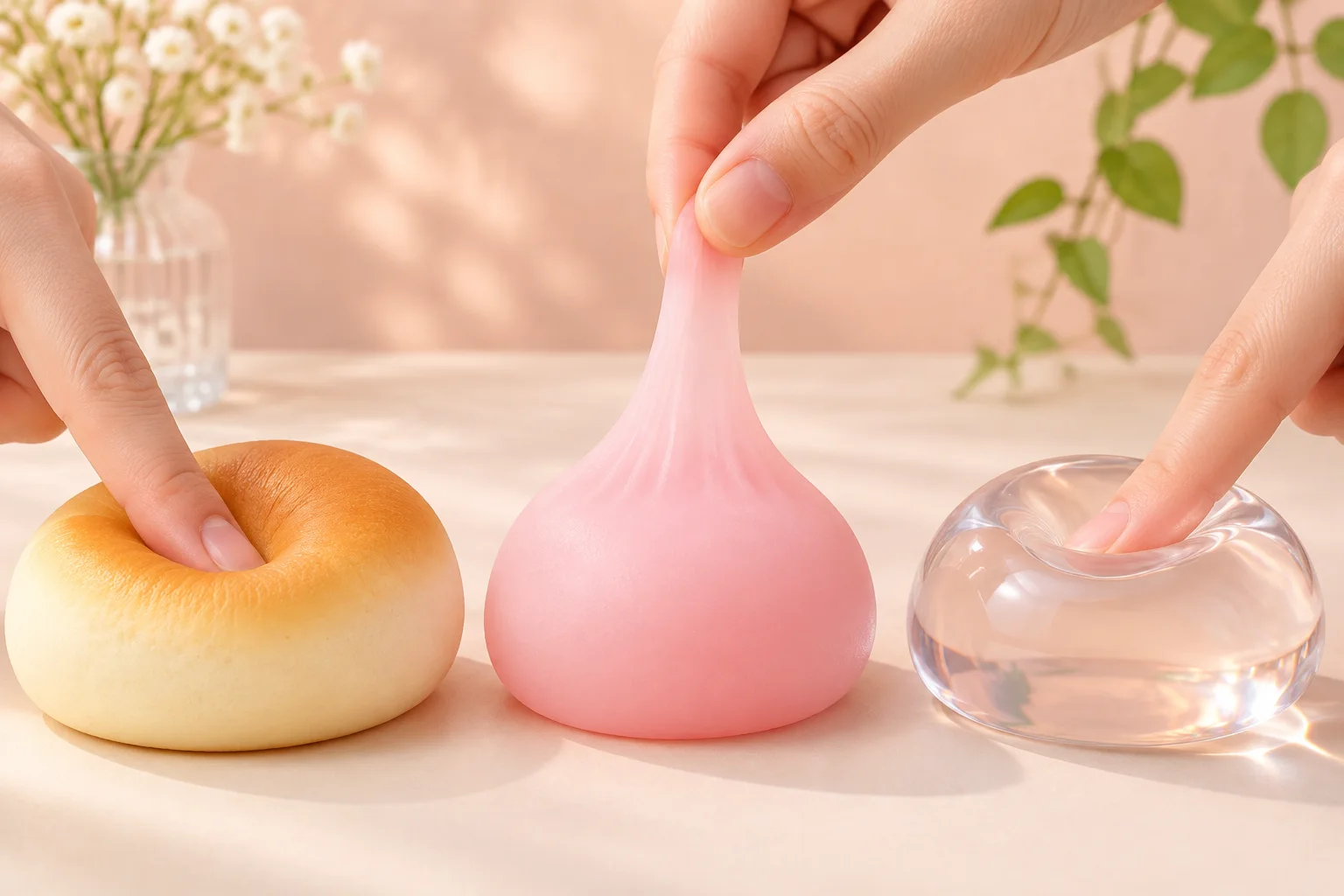
Buyers often ask for 'a squishy' as if the word named one material. It does not. The squishy and fidget line on this site includes slow-rise foam, soft TPR, and silicone. They look related in a photograph and behave differently in a hand. Choosing the material is the first decision, because it decides odor, recovery, decoration, and how the piece should be packed.
We will not publish a winner. A bakery shape for a gift counter and a clear fruit piece for a video are different jobs. Tell us the job. The sample should then prove the material, not just the silhouette.
PU slow-rise foam
PU foam is the familiar slow-rise squishy. You press it, it holds the dent for a moment, and it climbs back. Painted detail sits on the surface, which is why breads, fruit, and simple characters read clearly. The surface can scuff if the piece is rubbed in a pocket every day. It is usually a display toy or a gentle squeeze toy, not a piece you expect to survive a school bag for a season without marks.
Odor is the complaint we hear first. A fresh foam piece can smell sweet or chemical. A sample that has aired is not the same as a piece pulled from a sealed inner bag on the shop floor. If smell matters to your buyer, say so, and smell the sample the way your customer will: soon after it leaves the pack.
TPR
TPR is a soft solid, or a soft solid with a colored filling you can see. It feels denser than foam. It does not climb back in the same slow way. Clear or translucent TPR can hold a fruit slice, a glitter center, or a simple color core. That is why rice-ball and jelly styles sit in this family.
TPR takes color in the material itself more often than as a painted skin. A logo is usually a pad print or a hang tag, not a painted scene across the whole surface. If your brand needs a detailed illustration on the toy, foam or a separate card may be the honest answer. If your brand needs a translucent look, TPR is the conversation.
Durability is better against a light squeeze and worse against a cut or a bite. Age grading and small parts still have to be decided for the market you name. We do not guess an age on the page. The sample and, if you ask, the test plan are where that is settled.
Silicone
Silicone feels smoother and more 'rubber' than foam. It is the usual choice when the piece should be wiped, when the shape is a food that people will compare with a real one, or when you want a pop surface. Glitter can be mixed in. Paint is less common; color is usually molded.
Silicone is not automatically 'cleaner' or 'safer' because the word sounds technical. It is a material with its own odor, its own tear behavior, and its own packing needs. A thin wall can collapse and stay collapsed. Ask the sample to be the wall thickness you intend to sell.
Which buyer wants which
A gift shop that wants a slow, pretty squeeze usually starts with PU. A buyer who wants a clear, glossy, food-like piece usually starts with TPR. A buyer who wants a wipeable shape, a pop, or a simple molded logo usually starts with silicone. Fidget metal and plastic sit beside these on the same category page, but they are not squishies and should not be quoted as if they were.
Decoration follows the material. A full-color painted face belongs on foam. A hang tag and a simple print belong almost anywhere. A window box shows the piece; a closed box hides odor until the shopper opens it, which can be a gift advantage or a returns problem. Say which risk you would rather carry.
Bring one question to the sample: feel, smell, recovery, or the logo. The longer note on what a squishy sample should prove is the checklist. When you know the material, send the brief.
A last practical test is the pack the piece will actually live in. Seal one sample the way you intend to ship it, leave it, and open it the way a shop will. Foam that looked even on a table can show a crease after a stacked carton. TPR that looked clear can show a cloudy film against the bag. Silicone that felt firm in the hand can look collapsed in a tight window. The material choice is not finished until the pack has had its say.