Blog · 2026-10-28
Toy safety testing for export, without the myths
Buyers ask about EN 71, ASTM F963, CPSIA, small parts, and labels. Testing is arranged when you ask, through accredited labs. We do not hold those certificates for you.
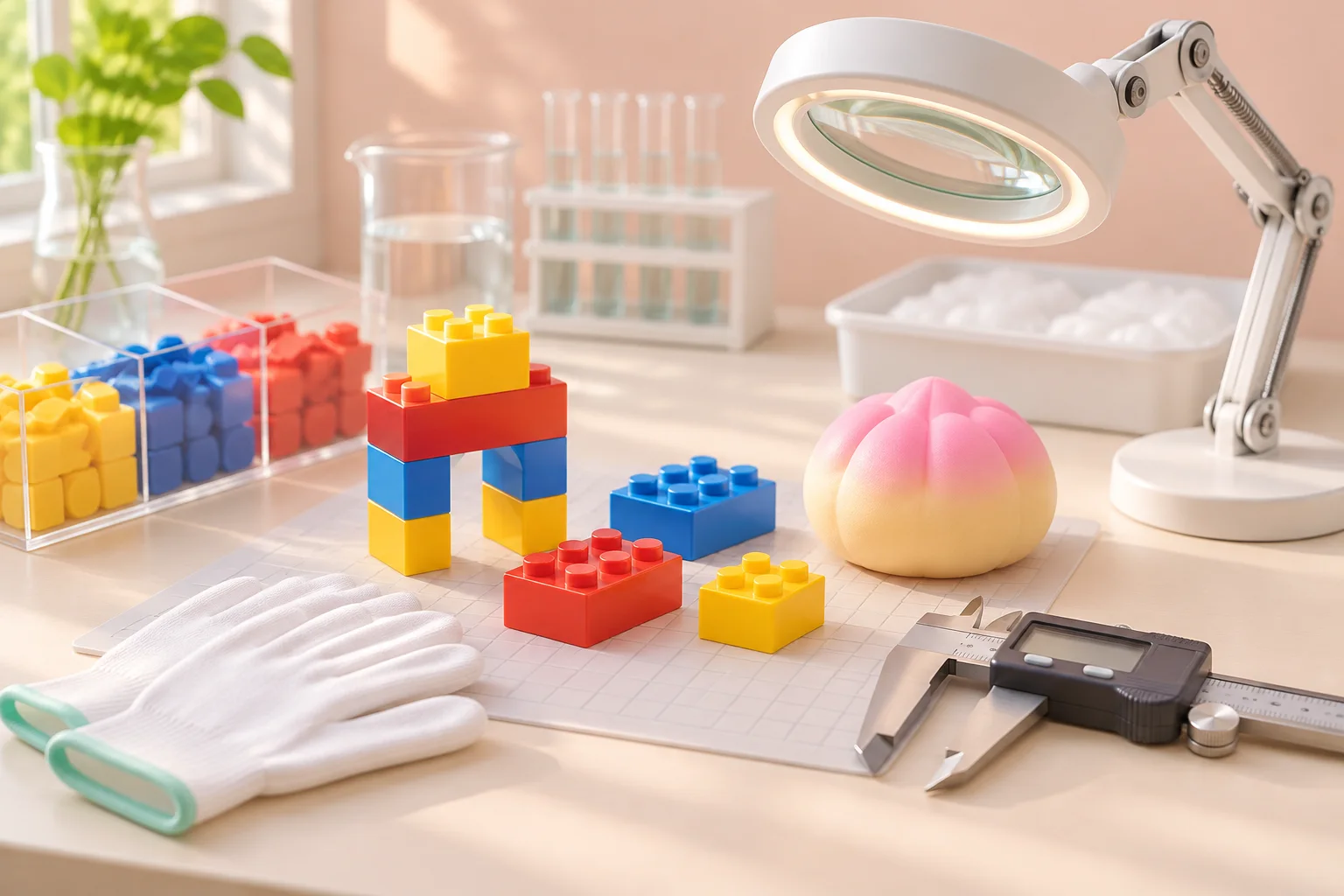
Safety paperwork is where confident websites get buyers into trouble. A badge on a factory photo is not a report for your item. A report for a similar toy is not a report for the toy you are about to ship. This page will not claim that Whisker & Co. holds a certificate, and it will not quote a cost or a duration. Those belong on a quotation, after the item and the market are named.
What we can do is describe what buyers usually ask about, and how we treat the request. Testing is arranged at the buyer's request, through accredited labs. You choose the market. The lab tests the item you approve. The report names that item. If you need a report, say so in the inquiry before bulk, not after the cartons are closed.
What buyers usually name
For the European Union, buyers often ask about the EN 71 series: mechanical and physical properties, flammability, and the migration of certain elements. They also ask about warnings and the traceability marks their importer expects on the pack. We do not decide which parts of that series apply to your toy. That is a question for the lab and for your compliance advisor, against the actual item.
For the United States, buyers often ask about ASTM F963 and about CPSIA requirements, including tracking labels and, where it applies, third-party testing. Again, the right scope depends on the toy, the age grade, and how you will sell it. We will not stamp 'passes ASTM' on a product page. If a report is arranged, you will receive the report, not a slogan.
Other markets have their own questions. If you sell into more than one, list them. A pack and a test plan that satisfy one authority can be incomplete for the next. We would rather hear that at the brief than discover it when a retailer asks for a document you do not have.
Small parts and age grading
Small parts are not a vibe. A brick element, a vinyl accessory, a squeaker, or a loose eye can be a small part. Age grading is the claim you are willing to make about who the toy is for. If you grade a set for a very young child, the sample has to be reviewed against that claim. If you grade it for an older child or a collector, the pack has to say so plainly.
We will not choose the age grade for you in order to make the toy easier to pass. That choice is yours, because you are the one who will print it. We will tell you when a design, such as a detachable small piece, fights the grade you want. You can change the design or change the grade. You should not do neither.
Labeling is part of the test story
Labs and retailers both read the pack. The product name, the warnings, the importer, the tracking information, and the barcode have to agree with the toy inside. A beautiful box with the wrong age icon is not a finished pack. Send the label text with the artwork, and say which market it is for. The note on custom packaging is the practical companion.
Material changes matter. A squishy that moves from PU foam to TPR is not the same test story. A brick set that adds an electronic element is not the same test story. If the sample you approved is not the goods you ship, the report may not follow the goods. Keep them paired.
How we arrange it
You tell us the market and the standard your advisor has named. We arrange the submission of the approved sample through an accredited lab. We do not write the report, and we do not shorten it. If the result requires a change to the toy or the pack, bulk waits. Shipping a lot 'while the retest runs' is how a bad report becomes a recall conversation.
None of the building block, squishy, or vinyl pages claim a pass. Design directions on the showcase are not tested products. When you are ready, send the brief with the market and whether a report is required before bulk.